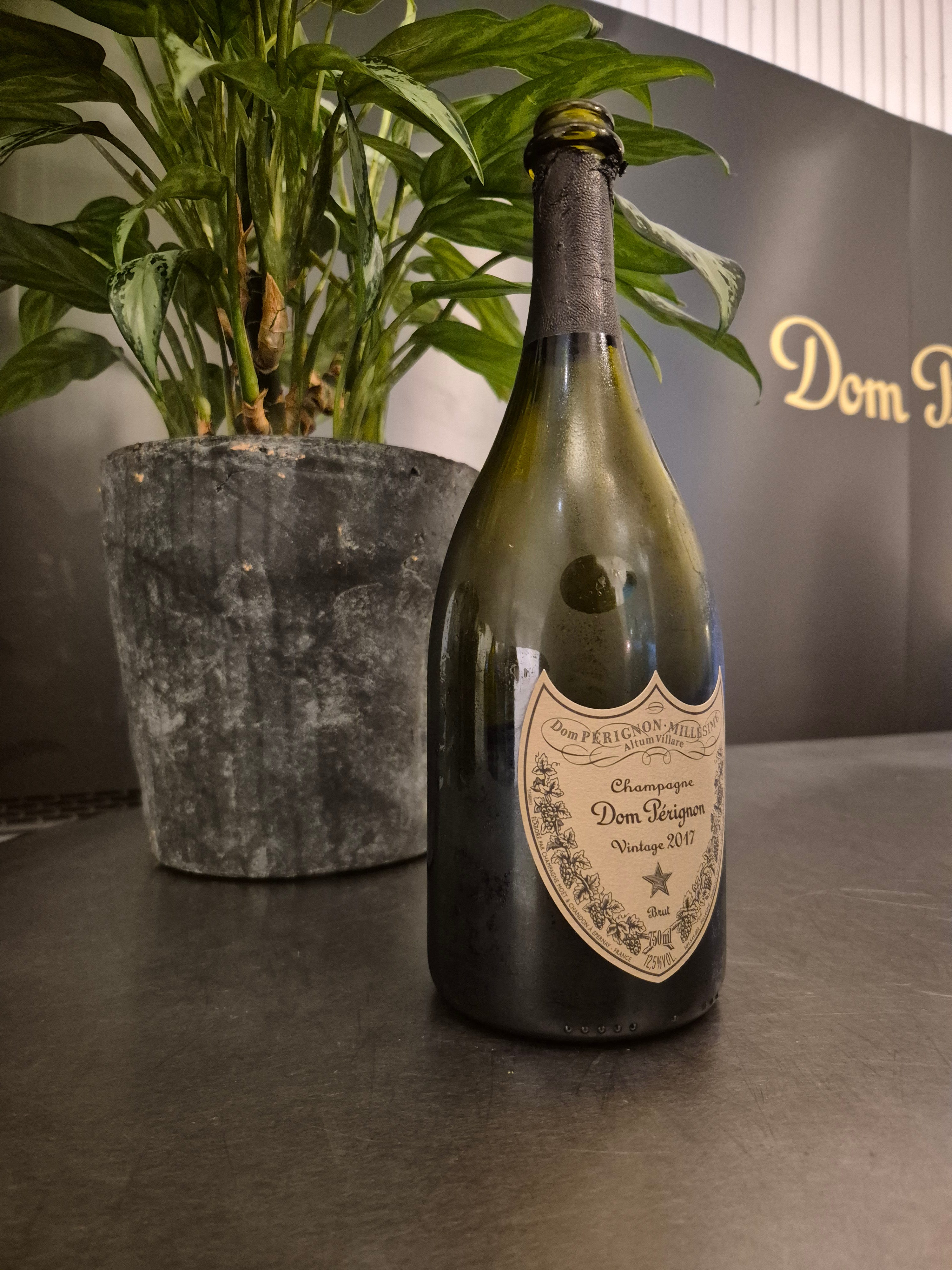
Dom Pérignon 2017
The new Dom Pérignon is the second reminder this week that vintages are multiple, interlinking stories - not just one. Plus fresh tastes of the 2008 P2 and the new 2010 Rosé.

“We went from ‘vintage of the century’ to ‘disaster’ in one week!”
Vincent Chaperon, Chef de Cave of Dom Pérignon, on the tribulations of August 2017
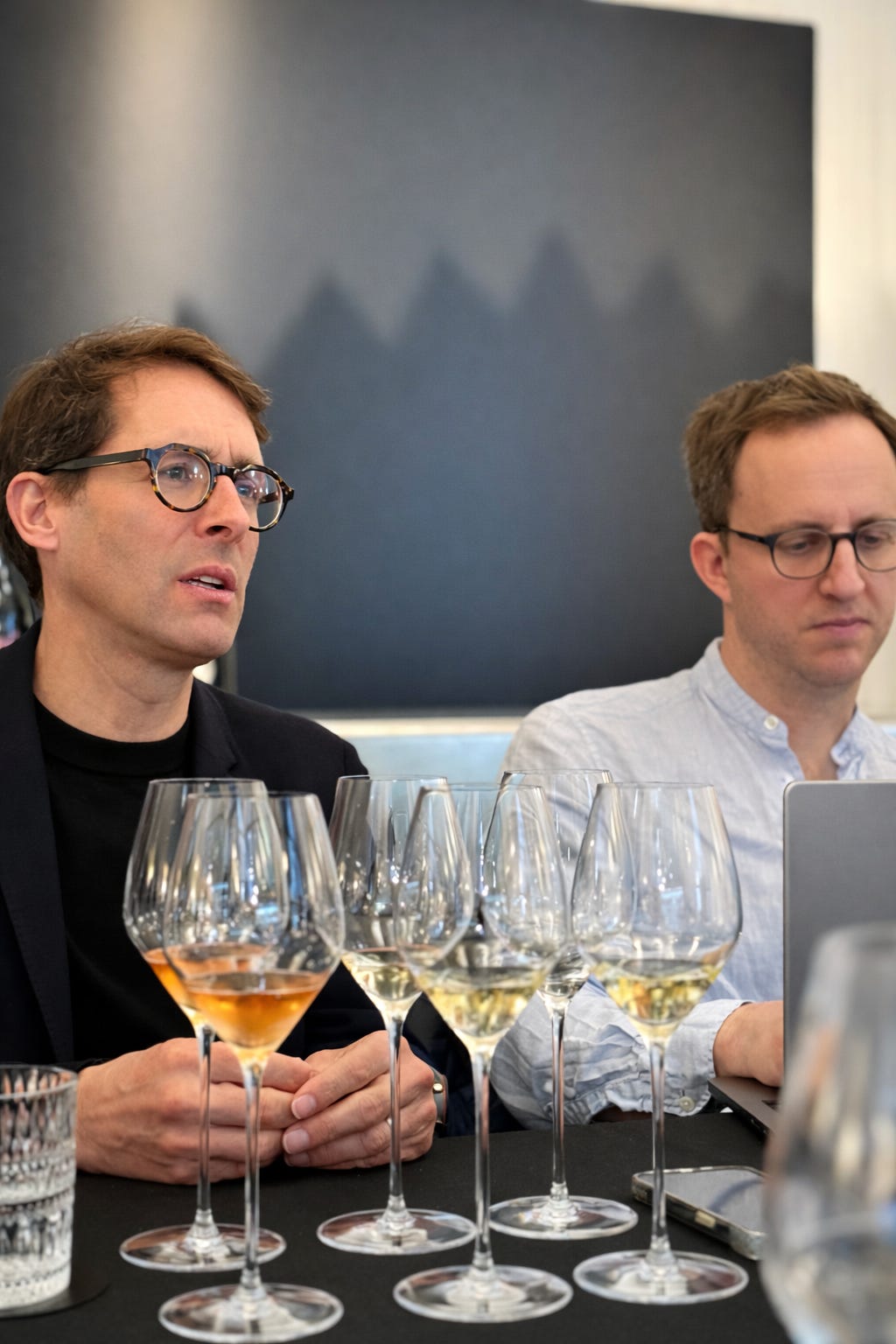
Vincent Chaperon, Chef de Cave of Dom Pérignon (next to a guy with a broken iron). Thanks to Douglas Blyde for the photo.
There’s always a little apprehension when a big wine is released from a vintage as troubled as 2017 in Champagne. There are so many wines that bear the bruises of the explosion of rot and acetic acid that hit after the rains in the second half of August that it has almost become an automatic ‘avoid-unless-you-know-what-you’re-buying’ vintage for everything apart from Chardonnay.
Not only did Chardonnay escape, but it can actually be top notch; last week I tasted my first (and truly excellent) 2017 Prestige Blanc de Blancs in Charles Heidsieck’s Blanc des Millénaires. It’s easy to forget the 2017 story before the rains, though, as Dom Pérignon Chef de Cave Vincent Chaperon reminded us. “It was quite a dry season, with a lot of sun and warmth - we actually had records in sun exposure and temperature.” Maturity was arriving quickly before the rains hit. Then, chaos. Things moved fast, with “a lot of degradation in Pinot Noir and Meunier”, Chaperon explained, as Chardonnay’s thicker skins saved it from much of the acetic rot that followed.
I asked Chaperon if specific parts of Champagne seemed to be more resilient in this vintage (echoes of which rang through the somewhat traumatic harvest of 2023). “It’s always the places on the slopes, with the driest soils, that can absorb the rain”, he believes. Much of the Côte des Blancs fits this bill, but there were parcels of Pinot Noir which escaped - even if they were in the minority. If there’s anyone in Champagne that owns enough top vineyards to be able to pull it off…
Limited edition
2017 is just 15% the size of a ‘normal’ release*, likely meaning under a million bottles produced. It’s the second-most Chardonnay-dominant Dom Pérignon release ever (after the 1970), with 61% Chardonnay against the remaining Pinot Noir. Chaperon explains that this is a question of blend, more than availability: “People say ‘ah, there’s more Chardonnay in this Dom Pérignon because you didn’t have enough Pinot’…but with the low yields the Pinot was so intense and concentrated that we needed more Chardonnay to balance it”.
There’s another dynamic at play, too, though - this is previous Chef de Cave Richard Geoffroy’s last release. And they knew it. “We didn’t make 2011, 2014, 2016…” explains Chaperon, “…so the pressure was on!” Whilst others made fine 2016s, the team simply weren’t happy with their results. There was a strong incentive, then, to make something out of this turbulent vintage, if only to mark Geoffroy’s last vintage with a wine that “broke the rules” in terms of both the small quantity produced.
A Rosé Partner from another tricky season
So, back to the trepidation. Would this be a quirky Dom Pérignon released thanks only to empty cellars, missed vintages, and Geoffroy’s retirement? Were there really the Pinots here, in this admittedly quite remarkable estate, to do what no other house has (yet) done - release a truly fine 2017 made with a significant part of red grapes?
Interestingly, the new Dom Pérignon Rosé is also here after the 2009 (below), which has been the release for almost three years.
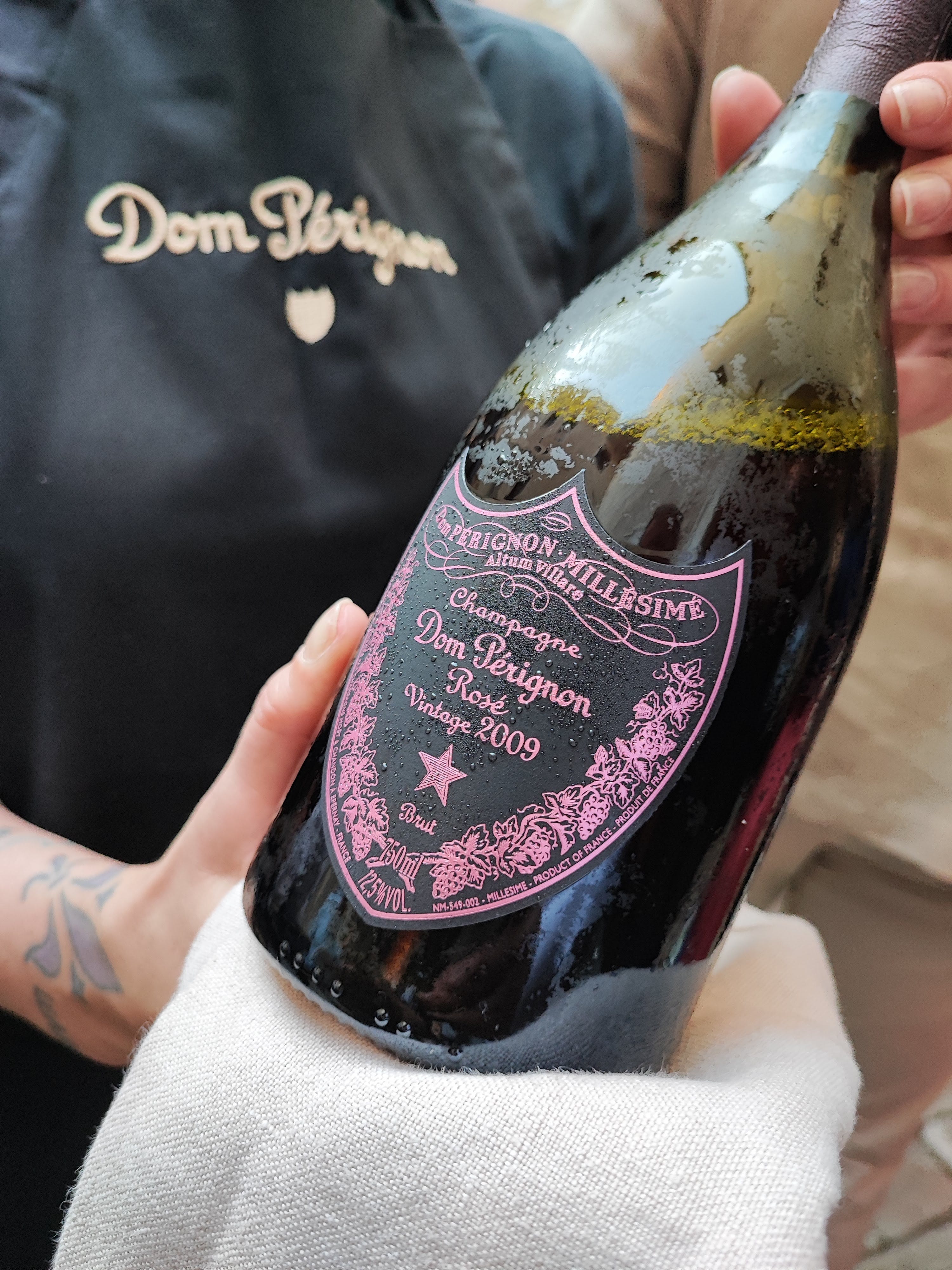
At the release of Dom Pérignon Rosé 2009, in 2023
2010 was also a year marked by some difficulties at harvest with Pinots once more, so it shares a little backstory with the 2017. Rosé is “the most challenging project” at Dom Pérignon according to Chaperon, who together with Geoffroy had begun taming what had become, quite an “extreme” style with a whopping 28% red wine addition in the 2004 yielding some wines - 2004 and 2006 especially, but 2008 too - that were dark, vinous and dramatic. I rather liked them all, but I can also see they might have caught newcomers off-guard. 2010 is just 11%.
Dom Pérignon Rosé is built on the white blend, but “simply adding red wine to the white blend doesn’t work” in Chaperon’s eyes, so he retains a number of wines to complete the white part of the blend alongside the red addition (which is almost almost Aÿ, and sometimes Bouzy and less-consistent Hautvillers).
The seven year age gap between the white (2017) and the rosé (2010) releases was not addressed, although this is wider than it used to be. 2004s were released two years apart, with the rosé seeing just under a decade on lees, yet the 2009 saw 12 years on lees when it was released six years after the blanc. I felt at the time that the 2009 was pushing the ageing quite far on release, and the 2010 does the same. These are both Prestige rosés that are showing you more of their cards from the outset than some of the tightly-bound examples from other Maisons.
Out of this pair of releases from complex vintages in 2017 and the 2010, one in particular is, I think, a particular success. I hope you won’t be annoyed that the next bit is for my paid subscribers, but as the photo of the top of the page demonstrates, I clearly need a new iron.
There’s another taste, too, of the 2008 P2 here which - no great spoiler alert - is phenomenal, and showed some interesting development since my first taste last year.
Dom Pérignon 2017