

[free] Back to J.S.B.
How wine sent me back to classical music again

After Covid, as I continued to pursue this slightly unlikely trajectory into the world of wine, something unexpected happened. I decided I wanted to play Bach.
I can’t describe how little I wanted to play Bach when I was younger. Listen, sometimes. Play? Much less so. Learning Bach as a teenager is a bit like learning to cook via the Larousse Gastronomique. It’s got everything in it you could really need, but the format doesn’t make any concessions to the impatient, or disorganised of thought.
Rachmaninoff! Chopin! Debussy! Jazz! A few blurry lines, a little pedal, a little colourism - that’s what I wanted. And, living in the middle of the countryside with no means of escape until the procurement of a driving license at seventeen, that’s what I got.
Even as a professional jazz pianist years later, friends would be astonished when I told them that I was probably a better pianist, at least as a technician, upon leaving school then I ever was appearing on stages, recordings and radio stations. Like any job, you adapt your skills to what’s needed, and I didn’t need to play double-handed trills, or thunderous double-octave passages - or pretty much anything fast at all in the left hand - in the world of contemporary jazz. Whilst my musicality improved, my technique didn’t.
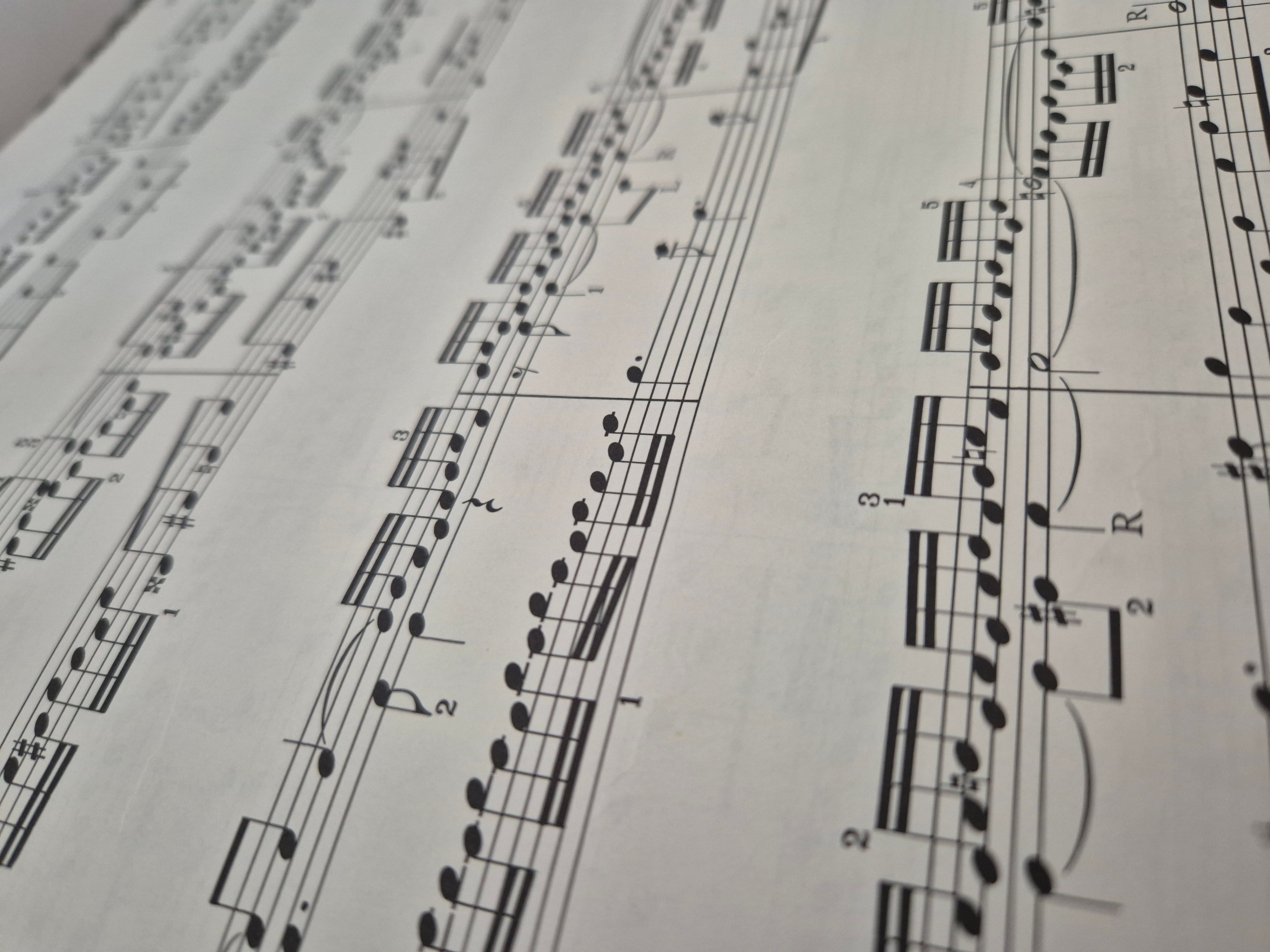
Covid, then, was a rupture. Gigs, teaching and income disappeared. We had a toddler, and a half-renovated house. Both placed large demands on resources. I felt the urge to write music, yes, but when it came to practising and playing contemporary jazz, Covid was a period of skin-shedding. I continued to teach piano, and to gig and record, especially with one quite successful group founded just before the pandemic and called, somewhat inadvertently, The Antidote. Musically, though, all I really wanted to do in my own time was write.
As the idea of wine writing and reviewing as a complementary career stated moving from impossible to merely inadvisable (a status in which it still resides), the urge to actually sit down purposefully at the piano started to surface once again. To this day, though, I wonder why I didn’t go back to the thing that actually brought me success - improvising, advanced contemporary harmonies, small groups. By any measure, this was what I was actually good at.
No, the first thing I picked up was my old grey hardback Bach Preludes and Fugues, bought when my piano teacher at Oxford, an immaculate gent called Raymond Fischer, insisted I put some daemons to rest. I’ll never be a great Bach player. Few are, really. Later, I picked up my collection of Beethoven Sonatas, which are perhaps little more forgiving:
Explaining what I’m practising in a Beethoven Piano Sonata
…but even those are played in the knowledge that I’ll never quite be the classical player I could have been. I was good - good enough to take Grade 8 at thirteen and do the rounds of local piano competitions - but never driven enough to drill out the four hours a day of practise it took to get into Conservatoire on the classical track. When I finished with my Chopin aged fourteen, I’d go up to my bedroom, sling my electric guitar around my neck and try and play along to Steve Vai records.
So why, now. am I suddenly looking forward to my tube trips thanks to Bach, Schubert and Beethoven? Why do I relish those fifteen minutes a day after the kids are out of the door when the piano is unoccupied (so long as my wife, a very good amateur pianist, doesn’t get there first?) Is the rekindling of love for the classics just a drift to old-farthood, or a case of unfinished business?
Perhaps, after a break and a new career, playing jazz just reminds me too much of the pressure, entirely placed on one person’s abilities and mentality, of making music into the thing that pays the bills. I’m wading back, maybe, into a sense of safety that was always there in classical music, borne of the knowledge that I was never quite good enough to have to confront the idea of it as a career.
Or maybe it’s as simple as knowing that, in a life now full to the brim with self-employment and parenting, neither of which come without instruction manuals or bosses, there’s comfort in a page full of dots, written by someone three hundred years ago who only asks you to bring them to life correctly, in the right order, and according to what you imagine was the spirit of their conception.
You start at the top and, although it’s difficult, you can see the end. It doesn’t move, it doesn’t disappear, the game doesn’t change. Today, somehow, that feels pretty reassuring.
Thanks Elisha and happy listening! Plenty of journeymen and journeywomen in the wine world for sure. Tom.
Wow, thanks for this post Tom. Just when I start to think I’m the only one in the world who has had multiple career types and now find myself ensconced in champagne; very far from where I started in advertising. Something else we have in common, coincidentally, is JS Bach. I love his music and have visited the church in Leipzig, Germany where he worked and the one where he is buried. Not long ago I commented to my husband that I wanted to learn more about him; take a deep dive into his music. As Jerry Seinfeld said of George, “So the Biff wants to be a buff?” And due to another Substack writer I follow, I was introduced to Evan Goldfine. Do you know of him? He spent a year listening to each and every piece of Bach’s music then writing about it. I felt that was a little gift to me, exactly what I needed to start to be somewhat a “buff”. So, good luck to us both in our journey with JS; you playing and my listening. Now all we have to do is figure which champagnes to pair with each piece. 🤔 that will be something to explore 🥂