


The twenty years between 1891 and 1911 were, for Champagne, a shock to every system. Commercially, structurally and agronomically, this relatively brief period is, on one hand, rife with the discord which forced the region into its modern state of complexity and, on the other hand, a perfect example of the ingenuity that has enabled it to ride out most of what the 20th - and 21st - Century has thrown at it.
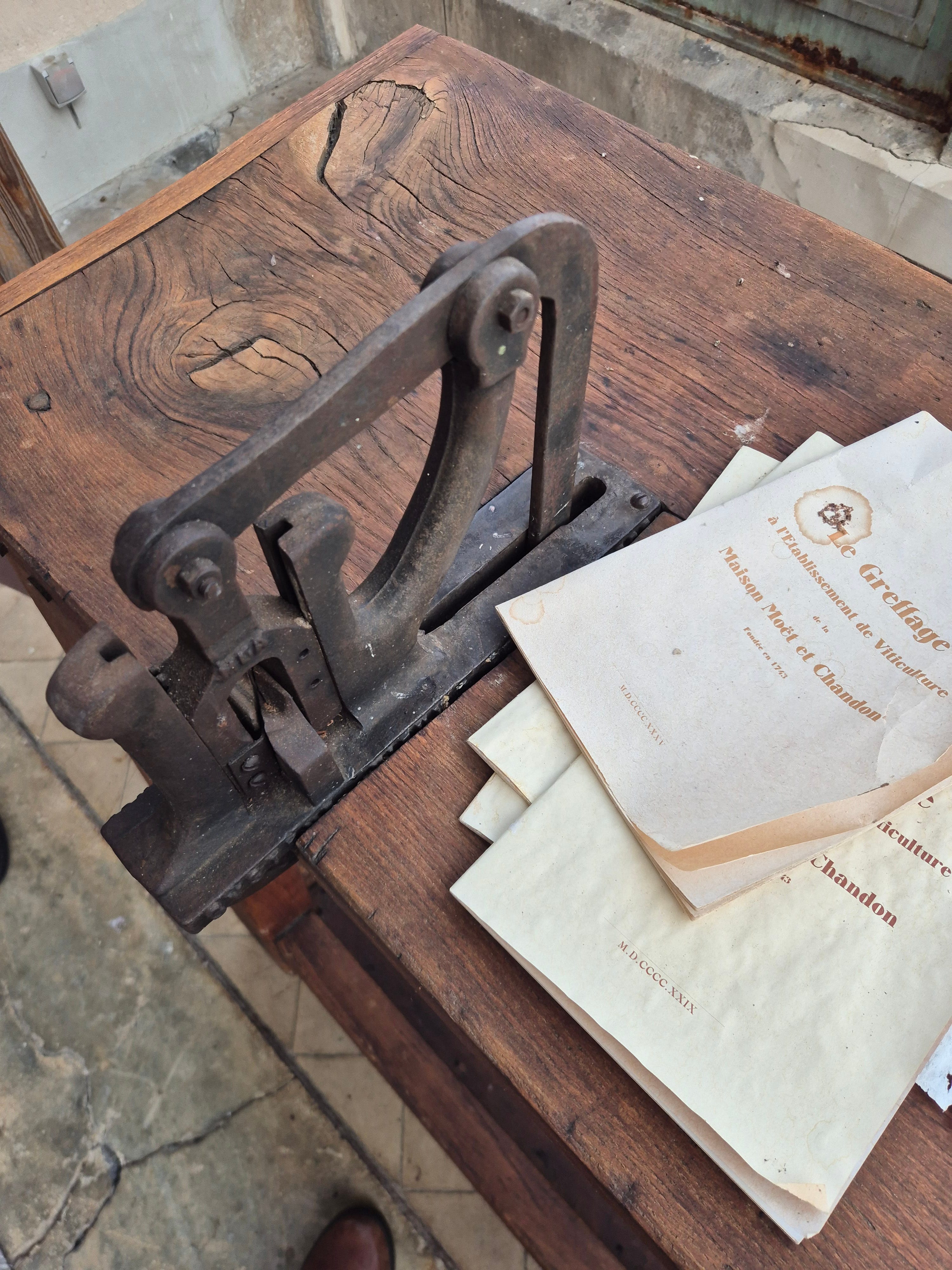
In November I visited Moët et Chandon’s ‘Fort Chabrol’, the private viticultural research station in Épernay that proved itself the Bletchley Park of Champagne’s war on Phylloxera. The Champenois were, up until the 1890s, hopeful that they would be spared, by grace of the region’s cold, wet climate, from the louse which threatened terminal decline in Europe’s vineyard. It merely took its time, though; when the first infestation was detected in a village called Tréloup in the Aisne in 1891 (twenty-eight years after the first French infestation), Moët bought the vineyard and burnt everything in it. By 1894 only nine hectares out of 16,000 planted had been affected. Perhaps there was some cause for optimism?
Resistance
Optimism and stubbornness are not always far apart, though. In today’s joined-up world, it’s hard to identify with quite how separate Champagne was from the vineyards of the South that had already begun grafting their traditional European vitis vinifera vines onto phylloxera-resistant American vine roots from the native American species vitis riparia and vitis rupestris. Until the twin appearances of mildou and phylloxera in the last decades of the century, the Champenois had plenty to worry about in terms of cold, rain and rot…but little that the monks of the 16th Century wouldn’t have complained about, either. Champagne had its own soils, its own methods of training vines, its own expertise, its own heritage, after all - there was no national body there to sweep in and provide it with a pre-packaged solution.
There was also no love lost, in the hotchpotch fields of vines trained en foule owned, then as today, largely by local families, for the corporate machinery which bought the grapes and sold the wines, either. When these potentially destructive invasive diseases did enter Champagne, as Patrick Forbes describes (in what is still probably the best book written on Champagne, from 1967), the Champenois - arguably the hardiest of France’s grape growers - were distrustful of being told they had to adopt solutions proffered to them by three groups of people they had little reason to trust: people from the South, Americans and the houses that bought their grapes.
“The phylloxera crisis had revealed a deplorable lack of confidence between the vine-growers and the champagne-makers. Men who work on the soil may be stubborn, conservative, unreceptive to new ideas…but a situation like the one that arose during the phylloxera invasion, with vine-growers refusing to make a concerted stand against a deadly enemy threatening their livelihoods…would never have occurred had all been well in the kingdom of Champagne”.
Patrick Forbes, Champagne, The Wine, The Land, The People (1967)
In short, phylloxera hit Champagne at a time when the resentment of the growers was, as Forbes describes, ‘smouldering’, as the growing forces of Big Business Champagne conspired to squeeze their earnings, bypass their grapes by buying cheaply outside the region (or even the country). It’s hard to quantify just how much Champagne was not from Champagne before the First World War, but the following figures, taken from Charles Curtis MW’s ‘Vintage Champagne’ and in turn supplied by the CIVC themselves, offer a hint:
1906 - Area under vine 15,500 Hectares. Total Sales 35,591,135
1912 - Area under productive vine not reported, but certainly shrinking (it reached 6,000 hectares by 1915). Average yield of the poor 1908/1909/1910 vintages - just 1.6 tonnes per hectare, or enough for a production of approximately 12 to 18 million bottles ready for sale in 1912. 1912 Sales - 29 million bottles (with 38 million sold in 1911 and 30 million sold in 1913!)
Where were these wines coming from?
These figures should probably be taken with a pinch of salt, although the numbers would support Forbes’ recounting that ‘12 million bottles were being sold each year in excess of the winefield’s production of grapes” in the early 1900s. Even after the 1911 law delimiting the region and forcing Champagne makers to separate wines from outside the region, they continued to sell sparkling wines - Vins Mousseux Ordinaire - with Curtis stating that these made up as much as 12.5% of sales as late as 1920.
Moët, and the Texan Connection
“…no viticultural practice can be generalised because every fine wine region has to adapt to their grape varieties and their climate. You won’t be surprised to hear me underline the impossibility for the Champenois vigneron to proceed with the multiplication of the vines by grafting by following the rules established by other viticultural regions.”
Raoul Chandon de Brailles, in ‘Le Greffage à l’Établissement de Viticulture de Moët et Chandon, published in 1909
Attempts, begun in the 1890s, to protect the vines via injection of Carbon Disulphide gas were costly, dangerous to health and ultimately retarded, but didn’t prevent, infections. It was clear that the vineyard would need to be replanted. It’s here that Fort Chabrol, and the calcareous hills of Texas, come together in the story of two men - Raoul Chandon de Brailles and Thomas Volney Munson.
The solution of grafting French grape varieties onto native American vine roots (or crossings made with them) that were resistant to phylloxera was already established further South in France, but there was an issue for Champagne, as there was for Cognac; riparia and rupestris couldn’t handle the chalk, with its high pH and active calcium carbonate content. Without a solution, Champagne’s Grand Cru villages were likely doomed.
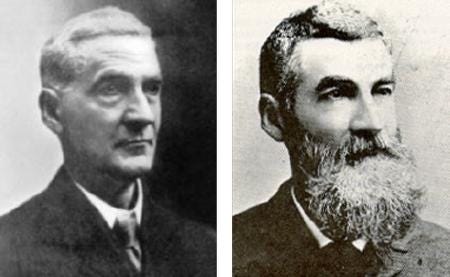
Such was the peril for France’s great calcareous vineyards that the botanist Dr. Pierre Viala was sent to the United States in 1887 to search for native, calcium-tolerant and phylloxera-resistant vines that might save the day. He wound up in the Ozarks with a Swiss national called Hermann Jaeger, who sent him on to the avid cataloguer of American vines (and teetotaling) nurseryman Munson.
Munson, then living in Denison, Texas, appears to have held a slightly fanatical interest in Native American grapes. Having reputedly travelled over 50,000 miles cataloguing Texan and wider American biodiversity, by 1909 he had published Foundations of American Grape Culture, a book which became one of the standard study manuals for America’s love affair with the grapes, juices, jellies and wines from Native American vines and the French-American hybrids such as Concord, Catawba and Maréchal Foch.
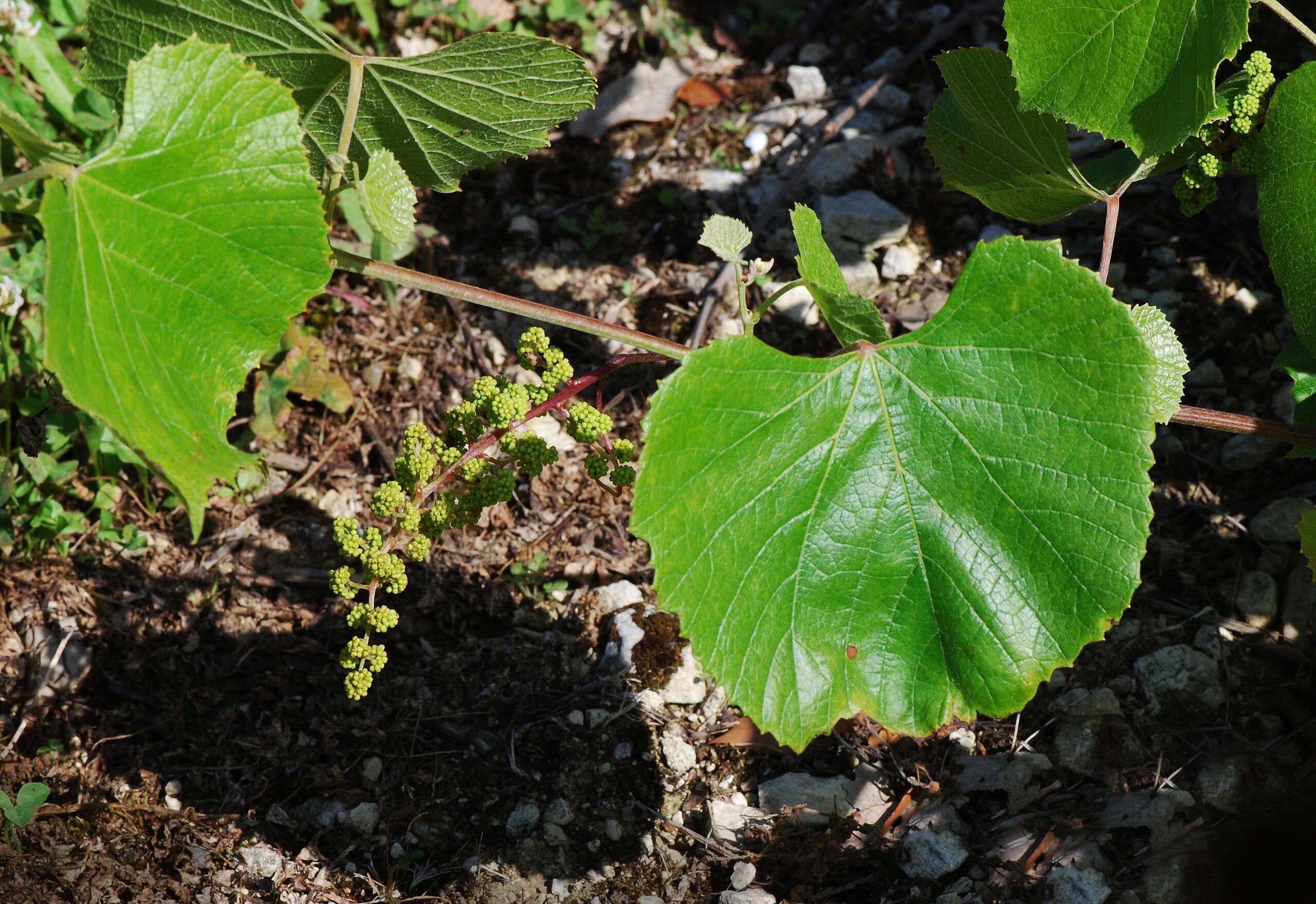
Viala learnt of the wild vitis berlandieri growing in the calcium-rich limestone hills of Texas from Munson, whose lab in Grayson County began preparing the first batches to be shipped immediately back to Montpellier, where Viala worked at the College of Agriculture.
The birth of 41B
Immediately, though, there was a problem - berlandieri cuttings would not root when propagated, meaning that reproduction on the scale needed was extremely complex. The solution arrived in Bordeaux, where the botanists Charles de Grasset and Alexis Millardet successfully crossed it with the vinifera variety Chasselas (amongst other crossings both with vinifera and other Native American varieties) producing a readily-rooting variety with solid phylloxera resistance. It was called 41B, and it became available in 1894.
Unlike Munson, both Millardet and Grasset would be dead by 1902, neither living to witness the truly resuscitative effect of their creation. Today, it is estimated that over 80,000 Hectares of French vineyard lie on 41B - over twice the size of Champagne itself. At the time of berlandieri’s discovery by Viala, only five hectares, or 7 football pitches, of Champagne’s vineyard were affected. In just three years, by 1900, this had risen to 639 hectares. To say that 41B arrived in the nick of time is no understatement - it’s clear that with just a few years’ delay the damage in Champagne could have been utterly catastrophic.
With 41B and other berlandieri rootstocks under trial by the end of the century, it was the turn of Raoul Chandon and the team at Fort Chabrol to solve the puzzle of creating successful grafts with Pinot and Chardonnay in Champagne’s cold, damp climate, all too aware that failure would consign the maison Moët et Chandon’s own vineyards, and Champagne itself, to ruin.
Fort Chabrol
Further South in Europe, newly-grafted vines were happily planted out in nurseries (if they weren’t grafted in the field itself). Asking these long-lost cousins - American-based vitis riparia, vitis rupestris and vitis berlandieri - to make friends with European vitis vinifera is, as it would be for humans, harder in the cold and rain of a Champenois spring than it is in the Midi sunshine, though.
Grafting is extremely sensitive to temperature and humidity, and before industrial refrigeration the process had to be adapted to the natural seasons of Champagne. The actual grafting stage had to take place with cold, fully dormant wood, yet heat - not always abundant in a Champenois spring - was required to make sure the grafts were complete and resilient at the time of planting out. It was a puzzle that needed some vigorous, systematic, inquisitive thinking, and some serious resourcing. With the growers still dragging their heels over the coming fight, the challenge landed at the door of the houses.
Enter Moët et Chandon, Fort Chabrol and Raoul Chandon de Brialles, whose innovations were taken up as the principal way of transforming Champagne’s vineyards from the mass of en foule, ‘crowded’ and individually-staked vines on their own roots familiar for hundreds of years into today’s neat rows of grafted vineyard.
Here’s how they did it, with words and photos from Chandon de Brialle’s 1909 pamphlet documenting the process.
1. Selecting the wood and storing
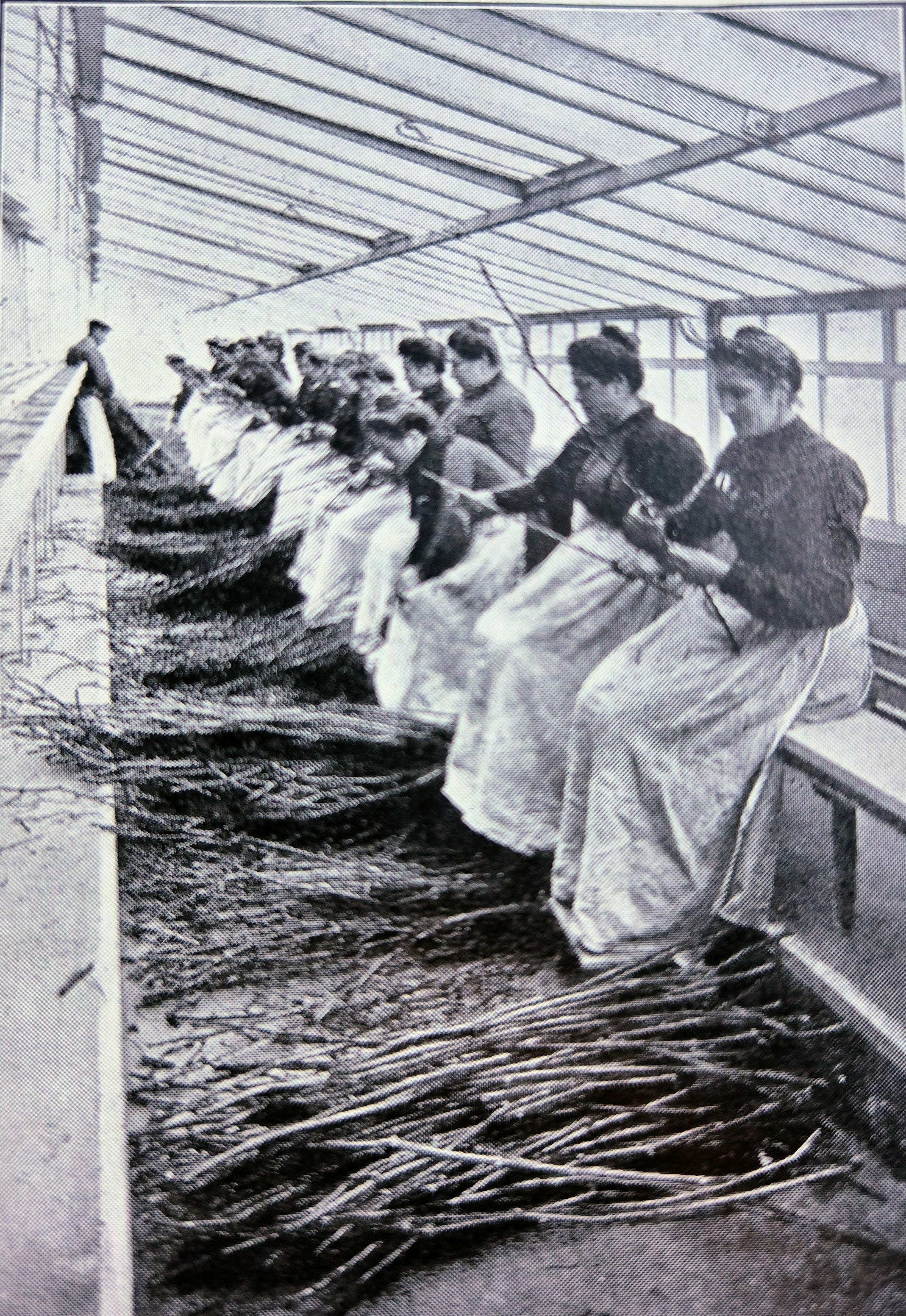
Growers selected dormant wood from their best Pinots and Chardonnays, whilst wood from the American vine-based rootstocks being trialled was either grown in the Midi or indeed in Champagne (with Chandon de Brialles viewing Champagne-grown wood as potentially superior, if it was produced in dry and rocky soils). At Fort Chabrol these were cut to length (above) before being stored in the cellars until Spring.
It’s worth noting here that what was being practiced here is essentially ‘massale selection’, whereby growers look at their best-performing vines and propagate only from these. It wasn’t until the 1970s that nurseries began offering ‘clones’ of Pinot and Chardonnay, pre-selected for certain characteristics.
2. Soaking the wood
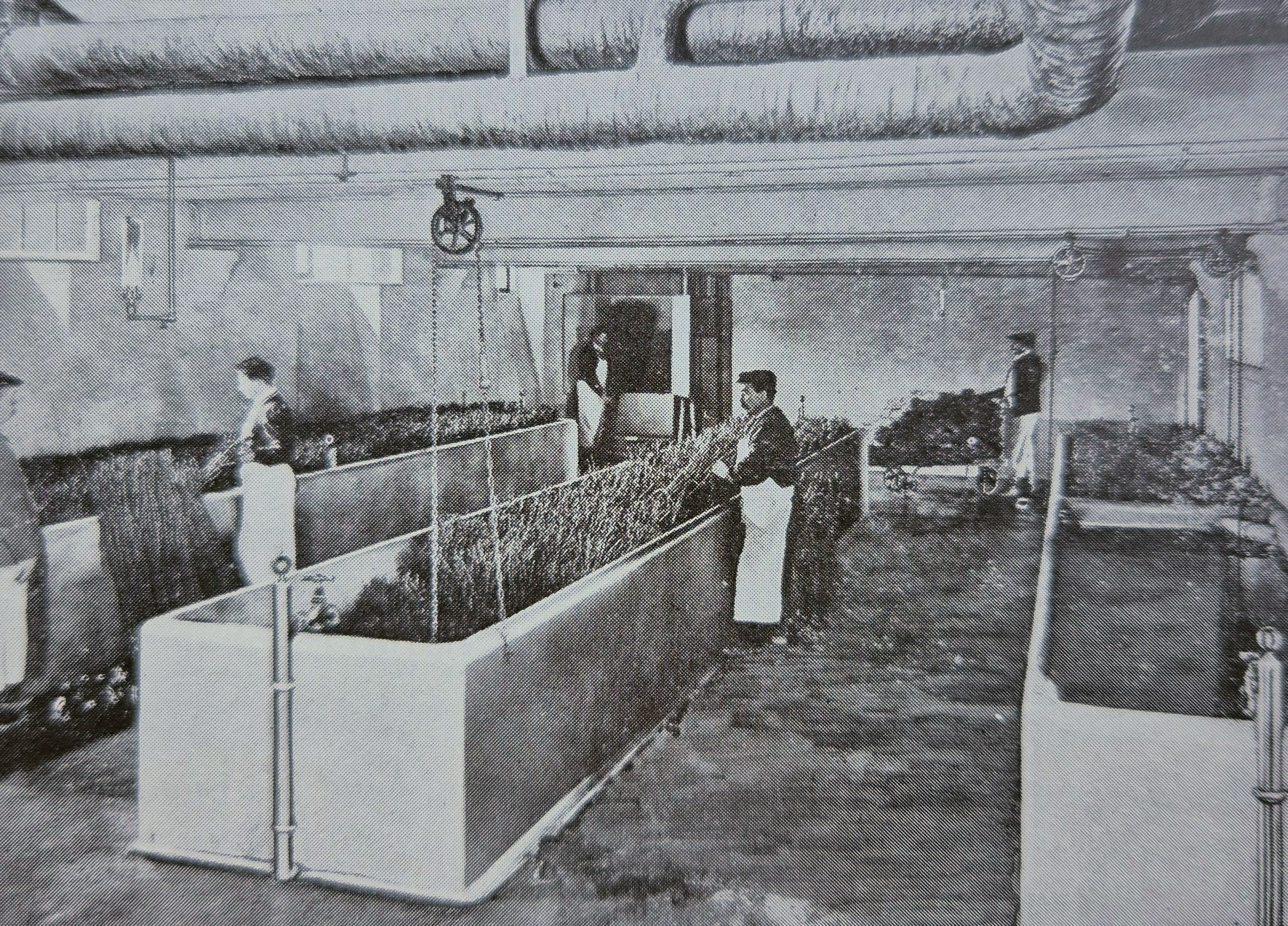
Before grafting in the Spring, the wood of both greffon (the desired variety) and porte-greffe (the rootstock) is soaked in cold water to “saturate” the inside of the wood. At Fort Chabrol they learnt that Pinot Noir, and especially Chardonnay, could only handle shorter soaking times than the rootstocks - just 48h, rather than 5 to 8 days, a good example of how the process needed to be honed for Champagne varieties.
The wood was then cut into approximately 10cm lengths and sorted by diameter so that good matches could be made.
3. Grafting
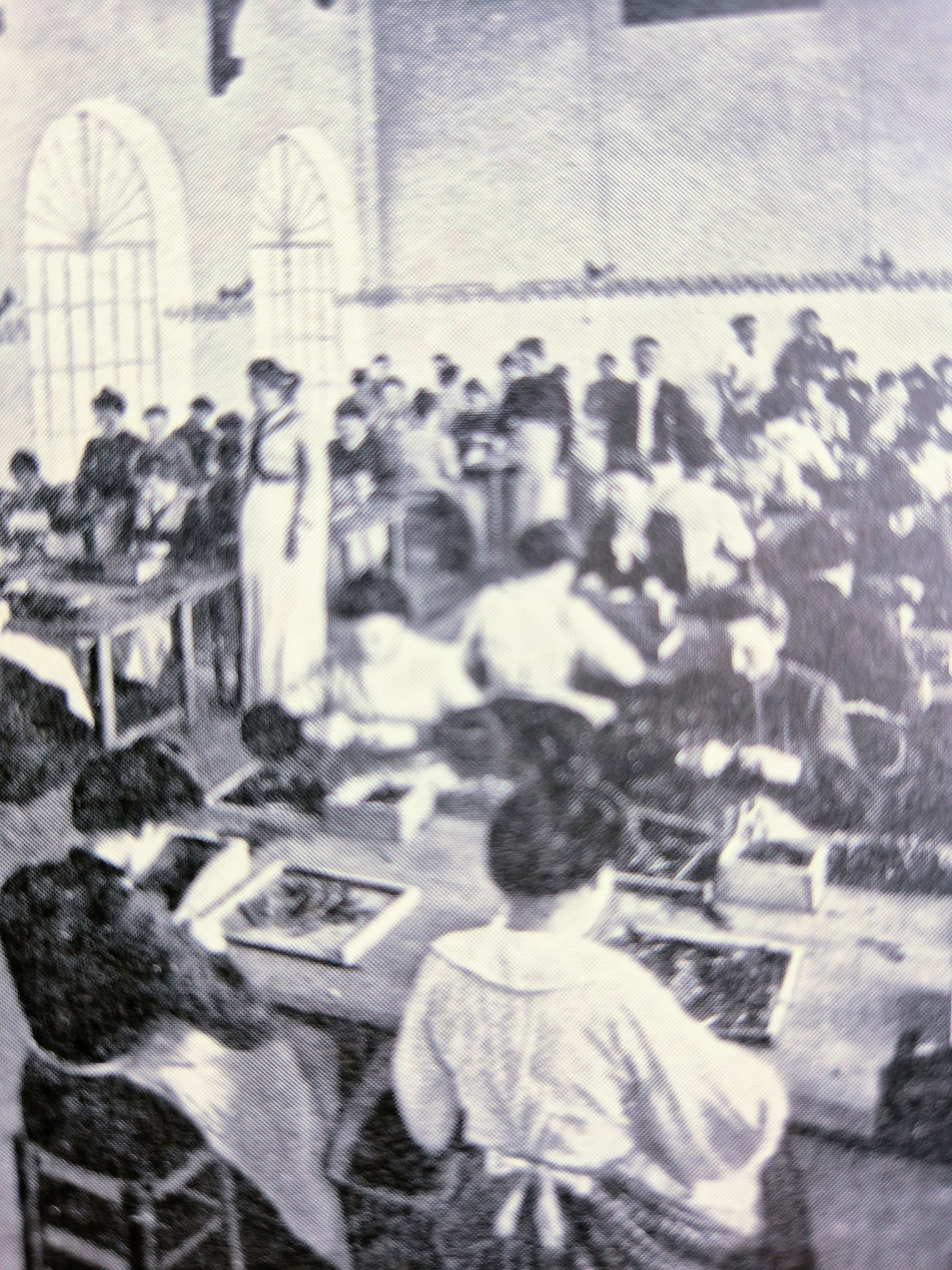
“Womens’ hands, more adept and agile than the men’s, take admirably to the execution of grafting”.
De Brialles explained that the time of year at which this task needed to be undertaken in Champagne was a time when the men were needed in the vineyards themselves. Using the greffe Anglaise, or the ‘Whip and Tongue Graft’, ladies and young women could graft up to 3,000 new plants per day each. The grafts did not need to be ligatured, as you see in field grafts, thanks to the careful handling and the process of greenhousing that followed ensuring the formation of scar tissue. This enabled faster grafting, too.
4. Hot room
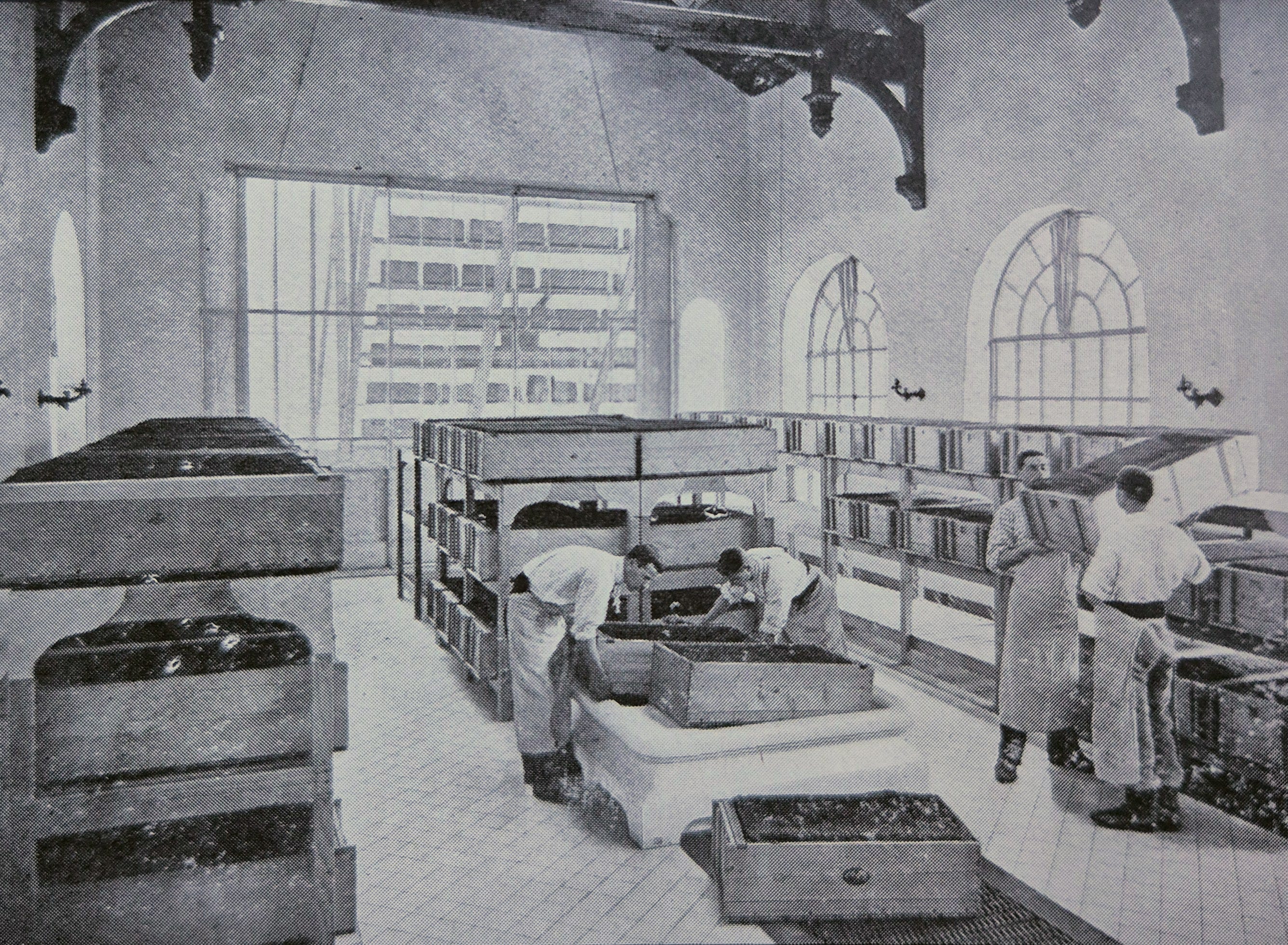
The chambre chaude was heated to around 30C by underfloor heating. Crucial here to Fort Chabrol’s process was the method the boxes of grafted wood were filled and packaged, using layers of sawdust and what De Brialles describes as ‘mousse’ of carbon, or foam, precisely calibrated to moderate the humidity as the process continued. This was considered one of the major innovations of the centre.
It was important the temperature was high enough that this process was relatively quick, otherwise the buds could rot rather than emerge properly. By the 7th day in the hot room, the buds of the greffon have ‘a few centimetres’ of length. They receive a number of ‘warm baths’, again using humid air to encourage scar tissue to form, and after 10 days they leave the hot room effectively sealed, with the porte-greffe able to supply the greffon with water.
5. Temperate glass house, then cold glass house
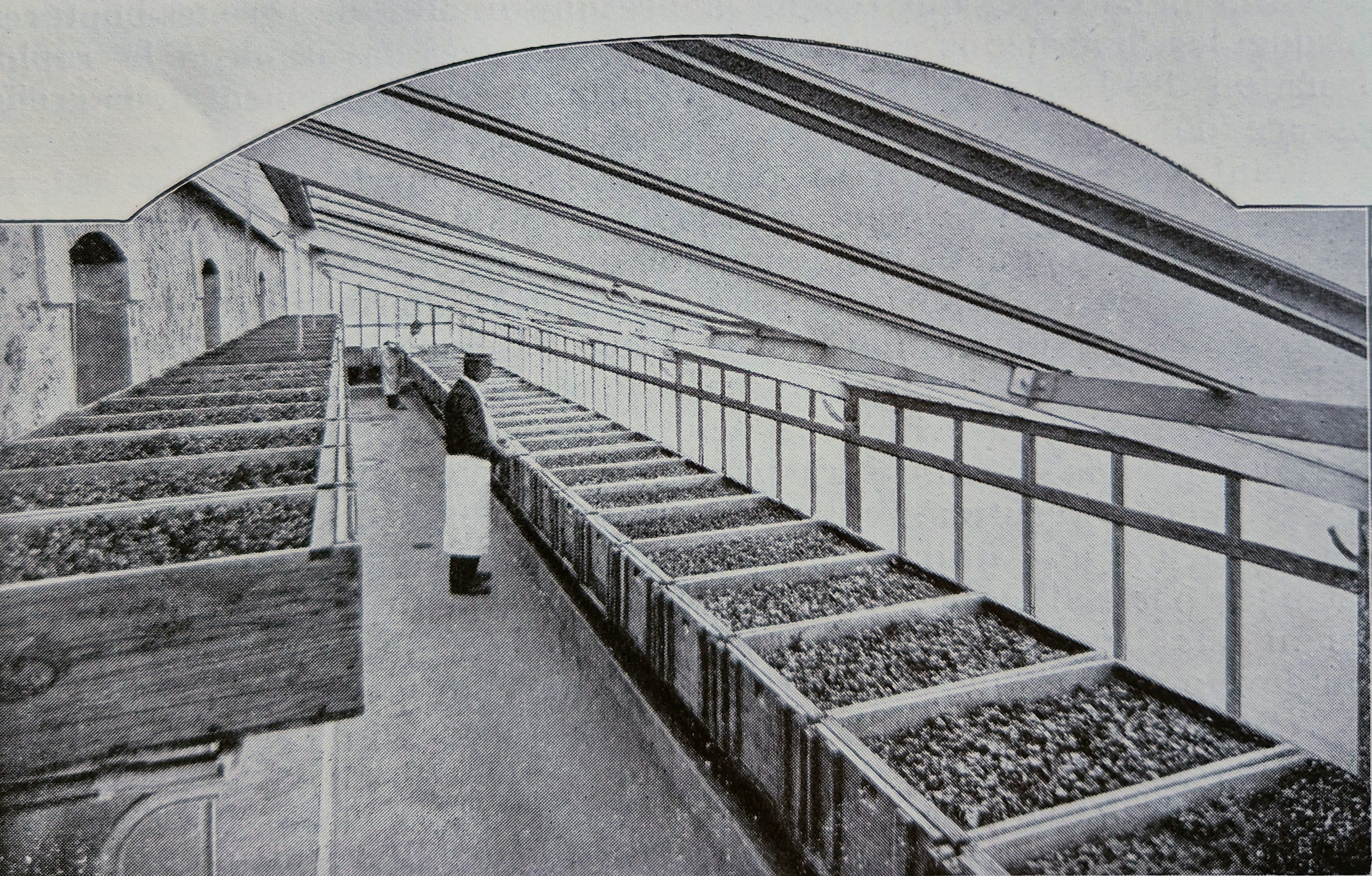
Here’s where the process really started to innovate. To begin to get the grafted wood ready for its life in a brisk Champanois spring, the grafted wood was put through two greenhouses. The first was temperate - 20-25C- and the second was unheated, gradually acclimatising the grafts to cooler temperatures. Bright light encouraged the new shoots to “green”, and roots started to appear at the cut ends. The process was finished approximately two weeks after the grafting took place.
6. Planting out in pepinière
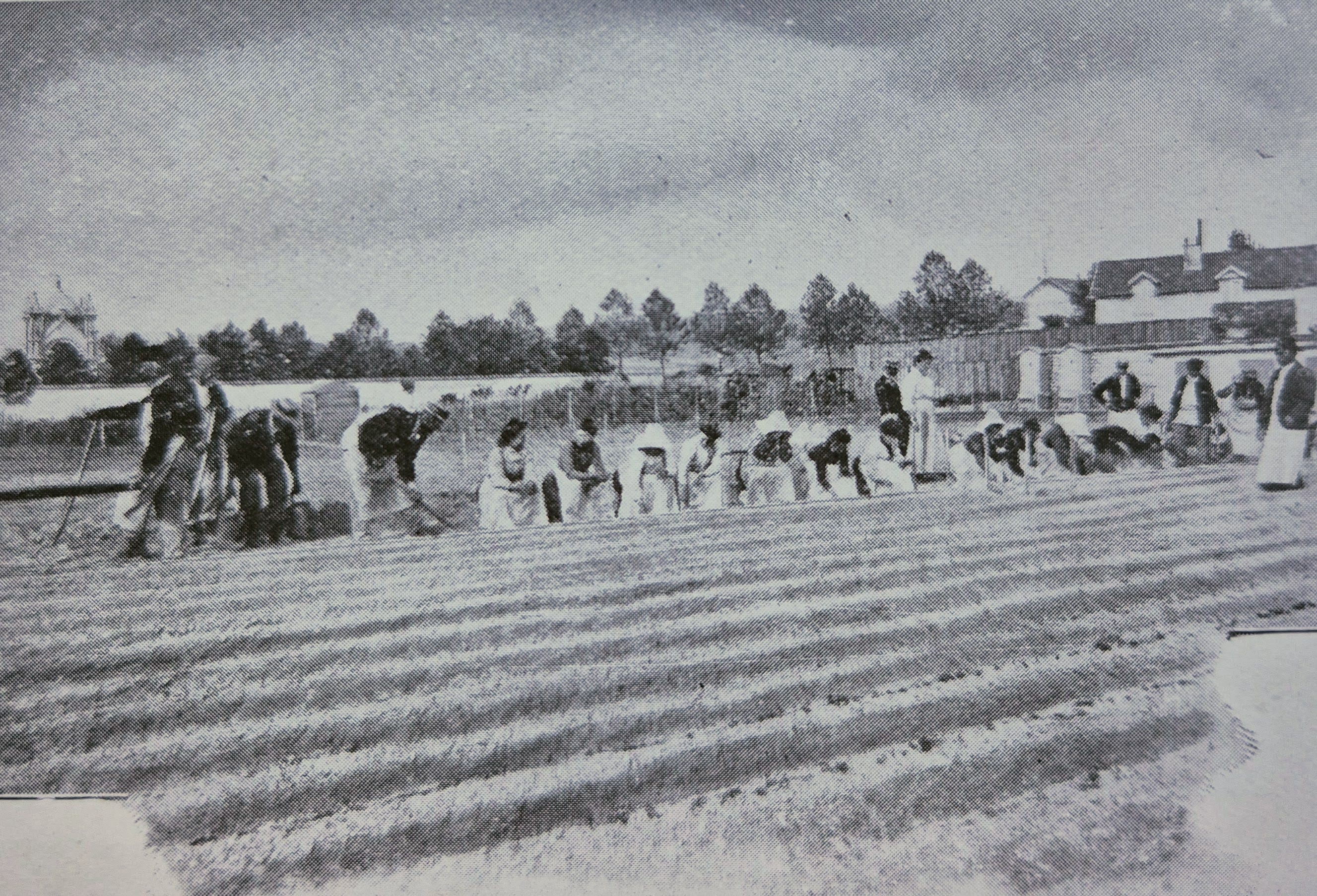
Whilst the graft itself now was strong, sealed and resilient, the rootstock variety needed to produce its first roots. This had to be done in a pepinière, or nursery, with very controlled, fine soil. They were planted extremely densely, in rows just 60cm apart, from the second half of April until (ideally) May. There was still risk of frost in Champagne here, and it could be cool and rainy; this part of the process was simply not viable with vines of weaker, less well-sealed grafts.
The vines were hilled up above the graft, and then later uncovered, or ‘weaned’ into the fresh air (a process that had proven very damaging during early trials of grafting without the greenhousing process). Roots that grew from the greffon were removed.
7. Digging up
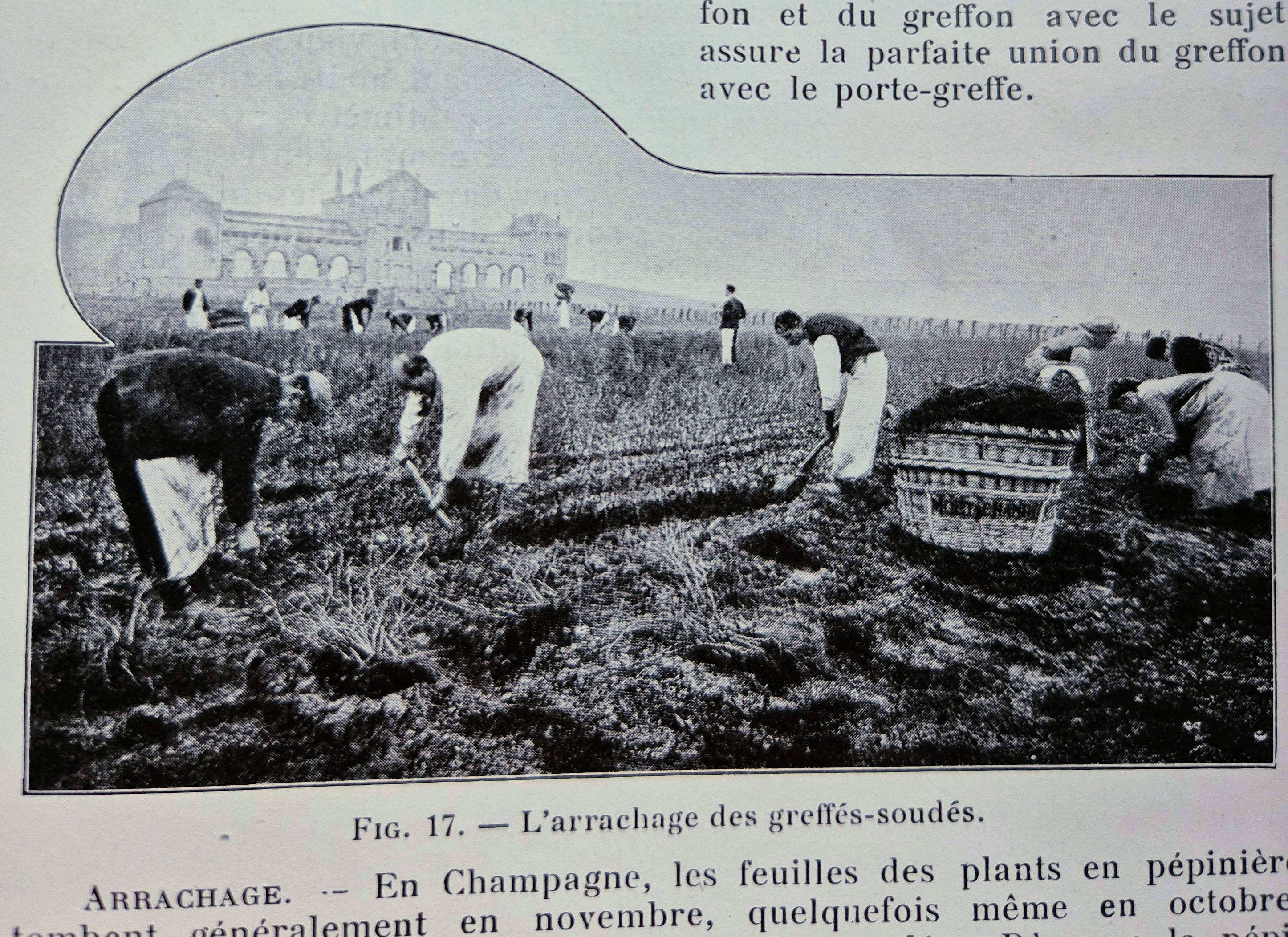
After leaf fall, ripening of the wood and dormancy, the new vines were dug up, new roots included, and taken to cold storage where they would be distributed for planting.
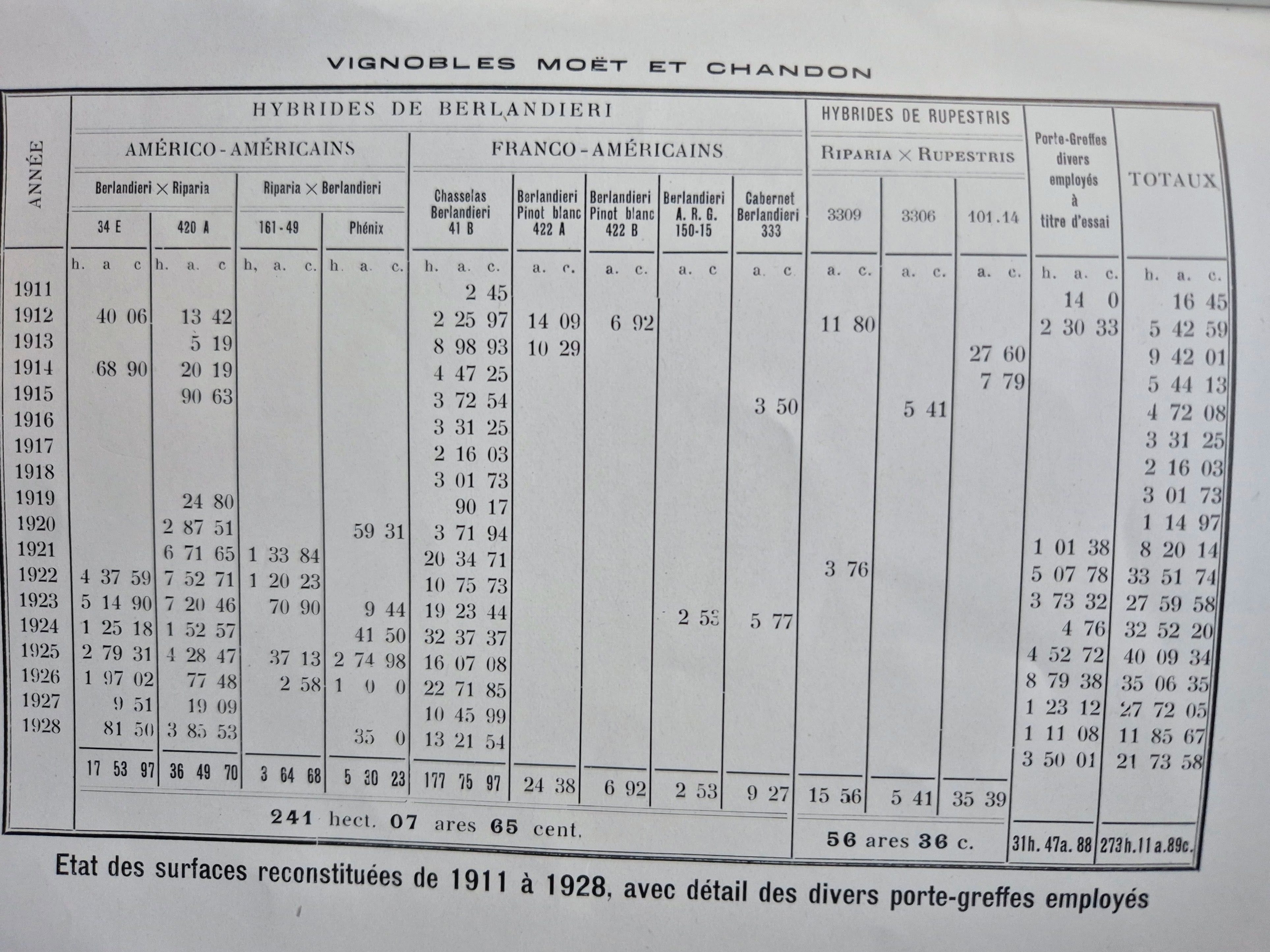
The rollout
The following table shows how much of the Moët et Chandon vineyard was reconstituted when, and with which rootstocks. The ascent of 41B is clearly visible pre-war, when Fort Chabrol was training up vignerons and grafters from all over the region.
Champagne’s future assured
Between Fort Chabrol and Denison, Texas, Champagne found its own solution to the particular challenge set by Phylloxera. It needed the vinegrower’s association, the other houses, and the financial institutions all to come together yet, even through the turmoil of the First World War the effort continued.
That there are still a few champagnes available to buy today from vines put together in this first flush of ingenuity is evidence enough of just how successful these early efforts proved. Today, as the vineyard once again shows signs of needing renewal - in vine material, rootstock, genetic diversity and climate resilience - it’s a story worth re-telling.