

Video : Champagne's R.I.
Trying to understand a wonderfully baffling reserve wine system

Learn about Champagne and you’ll hear about reserve wine in purely aesthetic terms; here’s how much reserve wine goes into our blends, here’s how we keep it, how we select it. (I recently wrote on the ‘perpetual reserve’ system, which is quite a common way to keep reserve:)
![[free] Perpetual Reserves](https://substackcdn.com/image/fetch/$s_!NMBU!,w_280,h_280,c_fill,f_webp,q_auto:good,fl_progressive:steep,g_auto/https%3A%2F%2Fsubstack-post-media.s3.amazonaws.com%2Fpublic%2Fimages%2F85570ad8-a814-47bd-92fc-45e30d6926d4_2816x1536.png)
The weird and confusing aspect of reserve wine in Champagne is that it has a split personality; on the one hand it’s an aesthetic tool, yes. But the other side - and what we’re looking at today - is that it’s a highly regulated economic tool. And it’s pretty interesting.
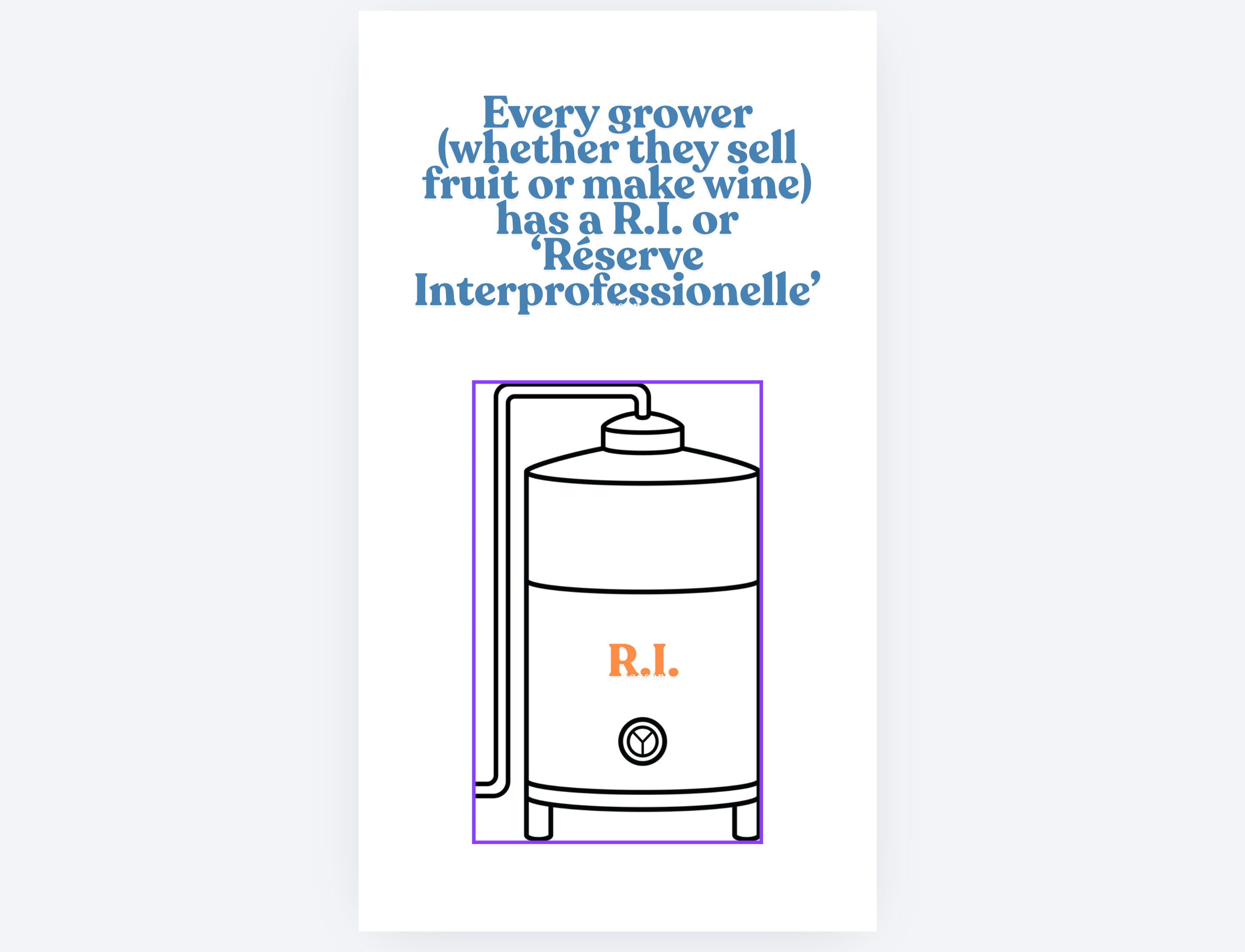
This is a very clever system, designed so that:
Growers have an insurance policy for bad harvests
Houses get an assurance that their supply will not fluctuate wildy
The region overall avoids wild swings in production
The main takeaways:
You can think of an R.I. a bit like an account of spare base wine held by every grower (physically kept in the cellars of the house they are supplying). It’s only allowed to be bottled when the authorities unblock it.
Growers get paid when the R.I. is unblocked and used in a champagne, not when it is harvested and delivered.
Effectively there is little difference between an R.I. and the grapes of a harvest - as a grower you use both to fulfil your contract, and your R.I. will be used to reach the appellation yield if your vineyard doesn’t produce enough. As a grower you don’t have a choice as to whether your R.I. is used.
Because you can swap out R.I. from lesser harvests for better quality R.I., in theory the R.I. should only improve in quality over time.
With the new credit system, if a grower falls below the appellation yield even with R.I., their account will go negative. Any surplus production in the next three years will go straight into appellation wine of the house they supply to replace that deficit. Only after your deficit is paid will excess go into topping up your R.I. (This has benefits for growers in that they can recoup losses straight after tough harvests, such as with 2021, but it can also reduce the amount of R.I. a producer can build up, reducing their insurance)
R.I. becomes part of the negotiation for each year’s permitted yield (appellation) - when this is low and growers don’t receive much income immediately, being allowed to put wine into R.I. can be used to offset this (so long as there’s space within the permitted maximum level).
You can still keep reserve wine outside of the R.I. system as a producer, by choosing not to bottle all your appellation wine.
Confused? Watch the 4 minute video below (maybe get a cup of tea first). I put some soothing guitar music on it, if that helps.
It only took me about four years to understand (most of) this system, so if you’re even getting half of it after 4 minutes you’re doing well!
